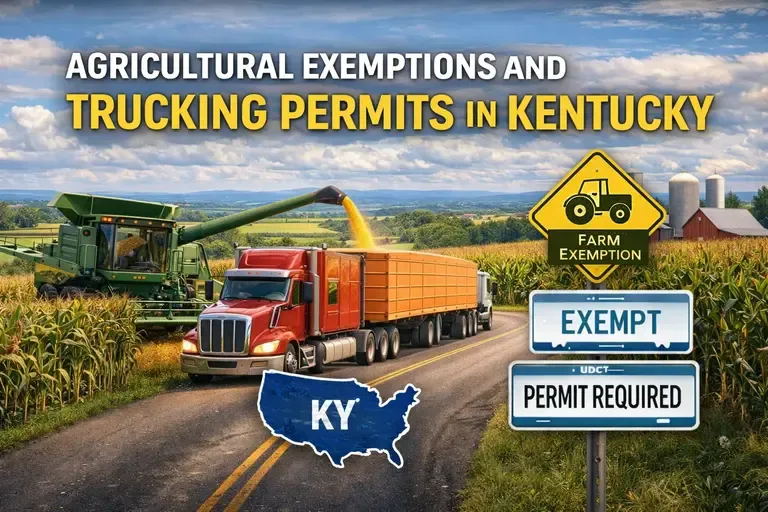
Who Qualifies for Agricultural Exemptions?
-
Farmers transporting their own products:
-
Crops, livestock, feed, or fertilizer from farm to farm, storage, or market.
-
-
Vehicles used solely for agricultural purposes:
-
Tractors, combines, and other farm equipment moving between fields or farms.
-
-
Time-bound exemptions:
-
Seasonal operations (e.g., harvest season) may allow temporary increased flexibility.
-
Exemptions apply only to intrastate travel — moving goods within Kentucky. Interstate transport typically requires standard permits.
Weight and Size Considerations
Even with an agricultural exemption, Kentucky imposes limits:
-
Vehicle Weight: Most farm vehicles are exempt from some gross vehicle weight limits, but axle weights may still apply to protect roads and bridges.
-
Oversize Loads: Large farm equipment may still require an oversize permit if it exceeds width, height, or length restrictions.
For example: a combine wider than 12 feet may need a special oversize permit, even if it’s on a farm exemption.
Common Exempted Farm Operations
-
Transporting crops to local markets or storage facilities.
-
Hauling livestock between farms or to processing facilities.
-
Moving farm machinery between fields, even on public roads.
-
Delivering feed, fertilizer, or seed for agricultural purposes.
When Permits Are Still Required
Even under agricultural exemptions, you still need a permit if:
-
Load exceeds maximum length, width, or height.
-
Vehicle exceeds local road or bridge weight restrictions.
-
Transport occurs during restricted hours (nighttime, holidays, or peak traffic).
-
Travel involves interstate commerce.
Kentucky requires farmers and carriers to check route restrictions before moving large or heavy equipment.
Tips for Compliance
-
Check local county roads: Some roads or bridges may have restrictions not covered by state exemptions.
-
Keep documentation: Carry proof that the vehicle or load qualifies for the agricultural exemption.
-
Confirm seasonal limits: Certain exemptions are only valid during planting or harvest seasons.
Summary
-
Agricultural exemptions in Kentucky reduce or eliminate permit requirements for intrastate farm operations.
-
Oversize or overweight loads may still require a special permit.
-
Always check local routes, bridge restrictions, and seasonal limitations.
-
Documentation and adherence to KYTC guidelines prevent fines and enforcement issues.