1. Who Needs a HazMat Permit in Kentucky
You must have a Kentucky HazMat Permit if your commercial vehicle is transporting hazardous materials in quantities that require placarding under 49 CFR Part 172. This includes:
-
Explosives
-
Flammable liquids and gases
-
Toxic or infectious substances
-
Radioactive materials
-
Corrosive substances
Note: If your vehicle is exempt from placarding, you may not need a permit, but federal regulations may still apply.
2. Kentucky HazMat Permit Requirements
To apply for a permit, you must provide:
-
Company Information
-
Legal business name
-
Mailing address and phone number
-
DOT or KY UCR number (if applicable)
-
-
Vehicle Information
-
Vehicle type (tractor, straight truck, tanker, etc.)
-
License plate and VIN
-
Gross vehicle weight (GVW)
-
-
Cargo Information
-
Type of hazardous material
-
UN/NA identification number
-
Quantity being transported
-
-
Insurance and Safety Compliance
-
Proof of insurance covering hazardous materials transport
-
Safety certifications if applicable
-
3. How to Apply
Kentucky HazMat permits can be obtained through the Kentucky Transportation Cabinet (KYTC), Division of Vehicle Regulation:
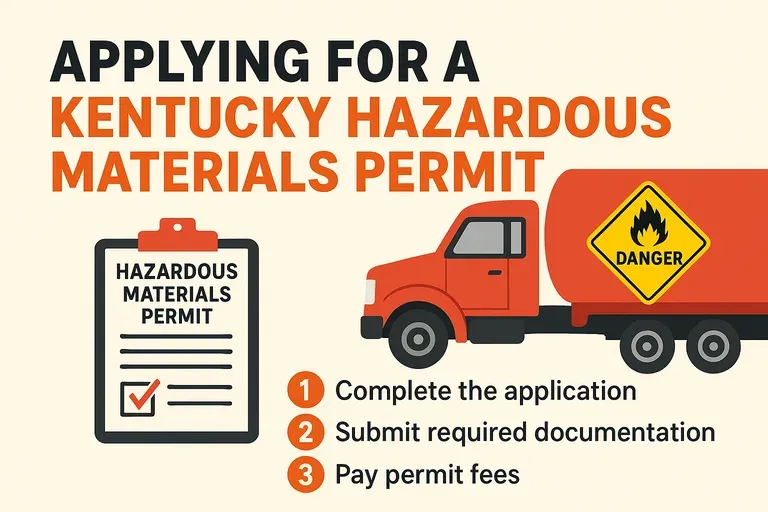
Step-by-Step Process
-
Complete the Application
-
Download the application from the KYTC website or complete it online.
-
-
Submit Required Documentation
-
Include all vehicle, cargo, and insurance details.
-
-
Pay Permit Fees
-
Fees vary depending on vehicle type, number of axles, and hazardous material class.
-
Payment is usually accepted via check, money order, or online payment.
-
-
Receive Permit
-
Once approved, you will receive a permit certificate and possibly placards to display on the vehicle.
-
4. Displaying the Permit
-
Keep the permit on the vehicle at all times when transporting hazardous materials.
-
Display required placards on the vehicle according to federal and state regulations.
5. Renewal & Compliance
-
HazMat permits are typically annual and must be renewed before expiration.
-
Drivers and carriers must comply with all KY and federal HazMat regulations, including:
-
Driver training
-
Vehicle inspection
-
Incident reporting
-
Key Takeaway: A Kentucky HazMat Permit ensures that vehicles carrying hazardous materials comply with both state and federal safety laws. Without it, carriers face fines, vehicle impoundment, and potential criminal liability.