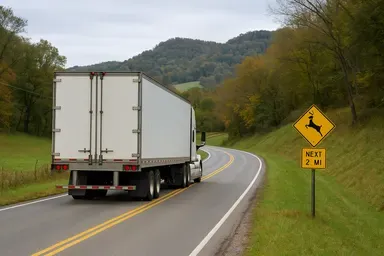
1. Know the Terrain Before You Drive
Kentucky’s rural landscape includes rolling hills, winding routes, and low-clearance bridges. Before setting out, review your route using:
-
KYTC’s (Kentucky Transportation Cabinet) road maps and restrictions.
-
Trucker GPS or routing software designed for commercial vehicles (avoid consumer GPS apps that may mislead you onto restricted routes).
-
Bridge clearance maps, especially for older county roads.
2. Watch for Changing Road Conditions
Rural Kentucky roads can vary from smooth asphalt to gravel and dirt.
Be alert for:
-
Loose shoulders that can cause rollovers.
-
Steep grades and blind curves — especially in Eastern Kentucky’s Appalachian region.
-
Wet leaves, fog, or ice patches during fall and winter months.
Slow down when approaching unfamiliar stretches and avoid sudden braking on curves or declines.
3. Share the Road with Local Traffic
Rural routes often mix trucks with farm vehicles, school buses, and cyclists.
Best practices:
-
Pass only when there’s clear visibility ahead.
-
Keep extra distance behind slow-moving tractors.
-
Be cautious near driveways or side roads, as farm equipment may enter suddenly.
Remember: many rural roads have no shoulder or escape lane, so patience and spacing are key.
4. Plan for Limited Services
Truck stops, repair shops, and fuel stations may be miles apart in Kentucky’s rural counties.
Plan ahead by:
-
Refueling before leaving major towns or interstates.
-
Keeping a basic emergency kit (water, flashlight, reflective triangles, tire gauge, and first aid).
-
Using paper maps or downloaded offline navigation in case of weak cell signals.
5. Be Prepared for Wildlife and Livestock
Deer and other animals are a major hazard, especially at dawn and dusk.
-
Reduce speed in wooded or open field areas.
-
Use high beams when safe to improve visibility.
-
If livestock wander onto the road, stop completely and don’t honk — it can spook animals.
6. Communicate and Check-In Regularly
Many rural zones lack reliable cell coverage.
-
Use CB radio or company dispatch check-ins to stay connected.
-
Share your planned route and ETA with your dispatcher or another driver.
-
Report any road hazards to Kentucky 511 or local authorities.
7. Follow Local and Seasonal Restrictions
Some Kentucky counties enforce weight limits, bridge restrictions, or seasonal closures on rural routes.
Before hauling:
-
Check county-level restrictions on the KYTC website.
-
Get oversize/overweight permits if needed.
-
Adjust your route if weather or seasonal flooding affects bridges and lowlands.
✅ Key Takeaway
Navigating Kentucky’s rural roads safely requires a blend of preparation, patience, and local awareness. Truck drivers who respect these unique conditions can avoid costly accidents, protect their equipment, and keep freight moving efficiently across the Bluegrass State.