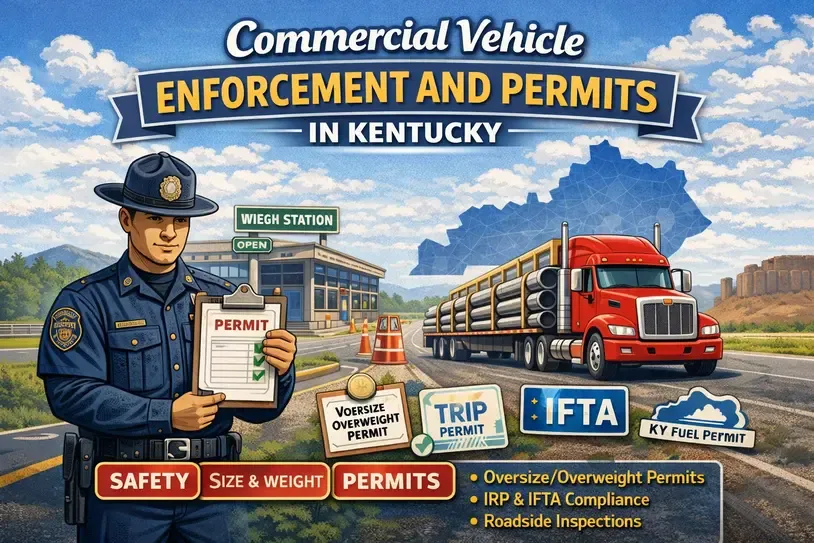
Be safe and avoid costly fines, apply for permits here https://www.kentuckytruckingonline.com/\
Who Enforces Commercial Vehicle Laws in Kentucky?
Commercial vehicle enforcement in Kentucky is primarily handled by:
-
Kentucky State Police – Commercial Vehicle Enforcement (KSP-CVE)
-
Kentucky Transportation Cabinet (KYTC)
-
Local and regional enforcement agencies (for city or county roads)
These agencies work together to ensure trucks comply with size, weight, safety, and permit laws.
Common Permits Checked During Enforcement
Enforcement officers routinely verify that drivers have the correct permits, including:
1. Oversize / Overweight Permits
Required when a vehicle or load exceeds Kentucky’s legal:
-
Width
-
Height
-
Length
-
Weight limits
Permits may be single-trip or annual, depending on the load and frequency.
2. Kentucky Trip Permits
Required for carriers not registered under:
-
IRP (International Registration Plan)
-
IFTA (International Fuel Tax Agreement)
Used for temporary operation within Kentucky.
3. Special Hauling Permits
Applies to:
-
Mobile homes and modular buildings
-
Construction equipment
-
Agricultural or logging loads
What Enforcement Officers Check
During roadside inspections, weigh stations, or mobile enforcement stops, officers typically review:
-
Valid oversize/overweight permit
-
Approved travel routes listed on the permit
-
Vehicle registration (IRP or trip permit)
-
Fuel tax compliance (IFTA or KY fuel permit)
-
Driver’s CDL and medical card
-
Insurance documentation
-
Hours-of-Service logs
-
Vehicle safety condition
Failure in any of these areas can result in penalties.
Weigh Stations & Roadside Inspections
Kentucky operates both fixed weigh stations and portable enforcement units.
-
Trucks may be required to stop regardless of whether they are interstate or intrastate
-
Oversize/overweight vehicles are closely monitored for permit compliance
-
Officers may verify axle weights and dimensions on site
Penalties for Non-Compliance
Violations can result in:
-
Fines and civil penalties
-
Out-of-service orders
-
Permit revocation or suspension
-
Forced offloading or load reconfiguration
-
Delays and missed delivery schedules
Operating without a required permit is one of the most common and costly violations.
Best Practices to Avoid Enforcement Issues
-
Secure all required permits before entering Kentucky
-
Ensure permit information matches the actual load
-
Follow approved routes and travel time restrictions
-
Keep permits accessible (printed or electronic, if allowed)
-
Verify escort vehicle requirements, if applicable
-
Stay updated on seasonal or weather-related restrictions
Interstate vs. Intrastate Enforcement
-
Interstate carriers must comply with both federal FMCSA rules and Kentucky state laws
-
Intrastate carriers must comply with Kentucky-specific permitting and safety regulations
Both are subject to the same roadside inspections and enforcement actions.
Final Takeaway
Kentucky takes commercial vehicle enforcement seriously. Having the correct permits—and following their conditions—is just as important as meeting safety and registration requirements. Proactive compliance saves time, money, and protects your operating authority.