Understanding Kentucky commercial trucking regulations can be difficult for both trucking companies and individual drivers. Staying current on permits, weight restrictions, and safety compliance is critical to avoiding costly fines and operational delays. This guide explains the key rules that every carrier and fleet operator should be aware of, as well as practical tips for running operations more smoothly.
Kentucky Trucking Permits
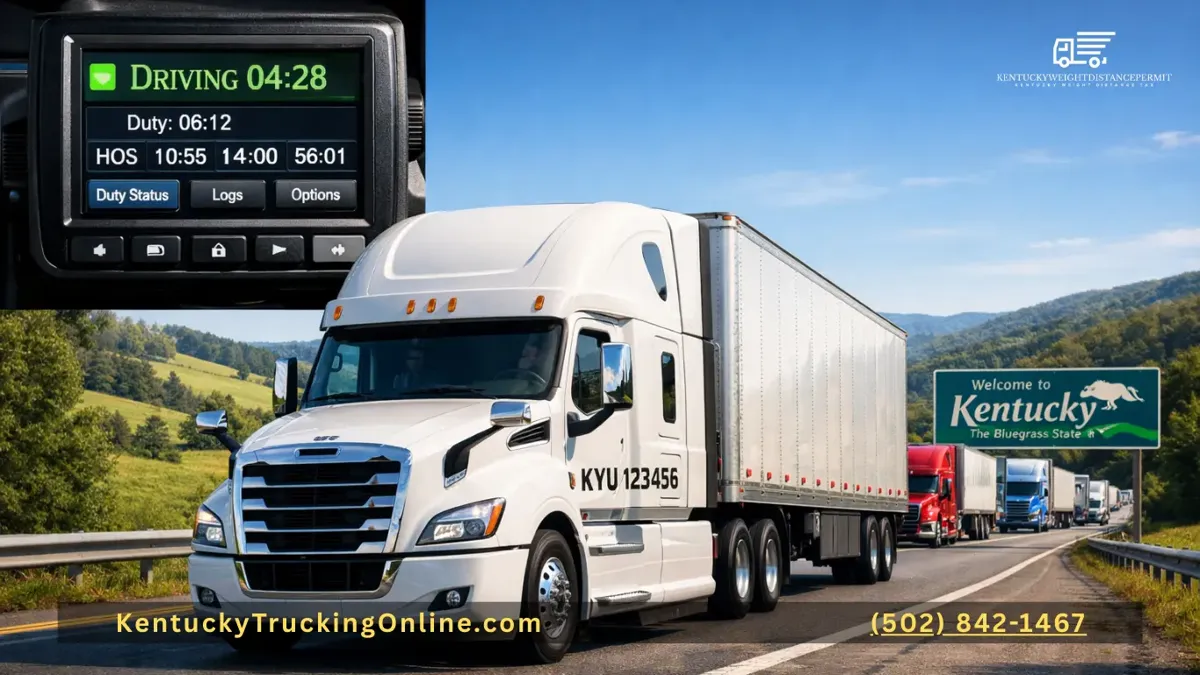
Kentucky requires commercial vehicles to obtain various permits based on weight, route, and cargo. The KYU number is required for carriers operating commercial vehicles weighing more than 60,000 pounds and ensures accurate fuel tax reporting. Furthermore, oversize or overweight loads require special permits that specify permissible routes and travel times. Truckers should always plan ahead, as permit violations can result in significant fines and detentions at weigh stations.
Hours of service (HOS) and electronic logging devices (ELDs)
One of the most important aspects of compliance is hours-of-service regulations. Kentucky follows federal HOS regulations that limit driving hours to help prevent fatigue-related accidents. Commercial drivers must also use Electronic Logging Devices (ELDs) to accurately record their hours of service. For fleets, this entails ensuring that all vehicles are equipped with compliant devices and that drivers understand HOS regulations for both intrastate and interstate operations.
Compliance With Safety and Inspections
Kentucky's Commercial Vehicle Enforcement (CVE) conducts regular inspections of weigh stations and roadside checkpoints. Common violations include brake problems, improper load securement, and ELD/HOS inconsistencies. Regular safety inspections, vehicle maintenance, and proper driver training can significantly reduce the likelihood of violations and downtime.
Why Choosing Kentucky Trucking Online Eases Compliance
Managing trucking compliance in Kentucky can be overwhelming, but Kentucky Trucking Online stands out. Our platform provides up-to-date information on permits, HOS regulations, and safety standards in one place. Carriers and drivers can easily verify requirements, submit necessary forms, and stay on top of regulatory changes thanks to our user-friendly interface. This convenience saves time, prevents costly errors, and ensures that your fleet runs smoothly.
Tips for Truckers and Fleet Operators
- Stay informed: Regularly check Kentucky’s trucking regulations and federal updates.
- Plan routes carefully: Use permitted routes to avoid fines and reduce delays.
- Maintain vehicles: Prevent common violations by keeping trucks in top condition.
- Train drivers: Ensure all drivers understand HOS rules, ELD usage, and safety compliance.
- Leverage online resources: Platforms like KentuckyTruckingOnline.com simplify permit applications and compliance tracking.
Whether you operate a single truck or a large fleet, understanding Kentucky commercial trucking regulations is critical to ensuring smooth, legal operations. From permits and HOS compliance to safety inspections, being proactive protects your company and drivers. By using our service, you gain a dependable partner who simplifies compliance, saves time, and keeps your fleet on the road efficiently.