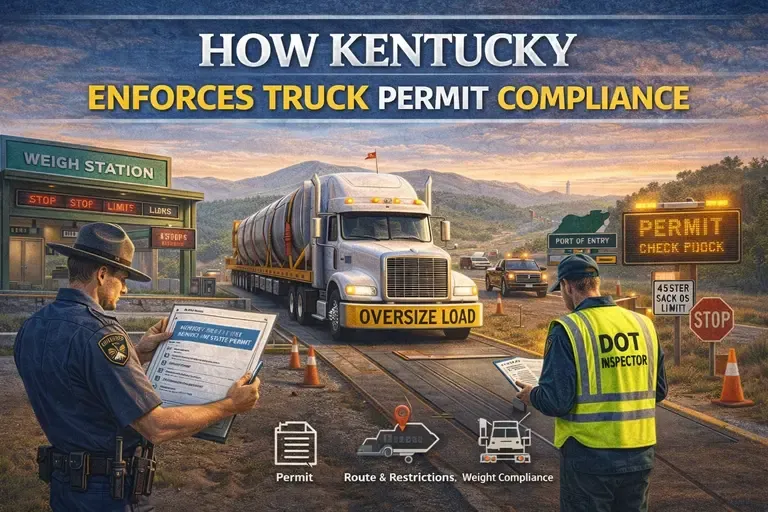
1. Key Enforcement Agencies
Several agencies oversee truck permit compliance in Kentucky:
-
Kentucky Transportation Cabinet (KYTC)
-
Issues oversize/overweight permits
-
Sets size, weight, and route regulations
-
-
Kentucky State Police – Commercial Vehicle Enforcement (CVE)
-
Conducts roadside inspections
-
Checks permits, weights, and safety compliance
-
-
Local City or County Transportation Departments
-
Enforce local truck route regulations
-
Ensure permits are valid for municipal roads
-
2. Weigh Stations and Inspection Sites
Kentucky operates permanent weigh stations and mobile inspection units at key freight corridors:
-
Weigh stations check:
-
Vehicle weight and axle distribution
-
Oversize/overweight permits
-
Safety equipment and load securement
-
Routing compliance
-
-
Commercial vehicles must stop at these stations unless otherwise exempt.
3. Roadside Enforcement
Even outside weigh stations, Kentucky law allows CVE officers to stop trucks on highways, bridges, and city streets to verify:
-
Permit validity
-
Proper escort vehicles for oversize loads
-
Compliance with travel time restrictions
-
Proper signage, lighting, and flags
Non-compliance can result in citations or out-of-service orders.
4. Permit Verification
Kentucky permits are route-specific:
-
Trucks must follow the approved routes on the permit
-
Officers check compliance against:
-
Bridges with weight restrictions
-
Restricted roads
-
Areas with construction or seasonal limitations
-
Deviation from permitted routes can invalidate the permit and result in fines.
5. Oversize/Overweight Load Enforcement
Oversize/overweight trucks are subject to additional scrutiny:
-
Dimensions (width, height, length) are measured
-
Gross and axle weights must comply with the permit
-
Load securement and safety equipment are checked
-
Escort requirements are verified
Extreme loads may require law enforcement escorts or specialized pilot cars.
6. Seasonal and Special Restrictions
Kentucky enforces seasonal weight restrictions (frost laws):
-
Certain roads are weight-limited in spring and early summer
-
Oversize/overweight permits may have travel time windows to protect roadways
7. Penalties for Non-Compliance
Violating truck permit regulations in Kentucky can result in:
-
Fines or civil penalties
-
Out-of-service orders
-
Permit suspension or revocation
-
Increased scrutiny for future permits
-
Delays in deliveries or re-routing
8. Technology in Enforcement
Kentucky uses technology to enhance enforcement:
-
Weigh-in-motion sensors to detect overweight vehicles
-
License plate recognition for permit verification
-
Online databases to cross-check permits and CVE inspections
This allows authorities to identify violations proactively.
9. Best Practices for Compliance
-
Obtain all necessary permits before entering Kentucky
-
Follow approved routes and travel restrictions
-
Ensure escort vehicles meet state requirements
-
Carry all permits, insurance, and weight documentation in the vehicle
-
Use a permit service for complex loads if necessary
Summary
Kentucky enforces truck permit compliance through weigh stations, roadside inspections, route monitoring, and technology, ensuring oversize and overweight vehicles operate safely. Carriers must follow all permit conditions, carry proper documentation, and comply with travel restrictions to avoid fines or delays.