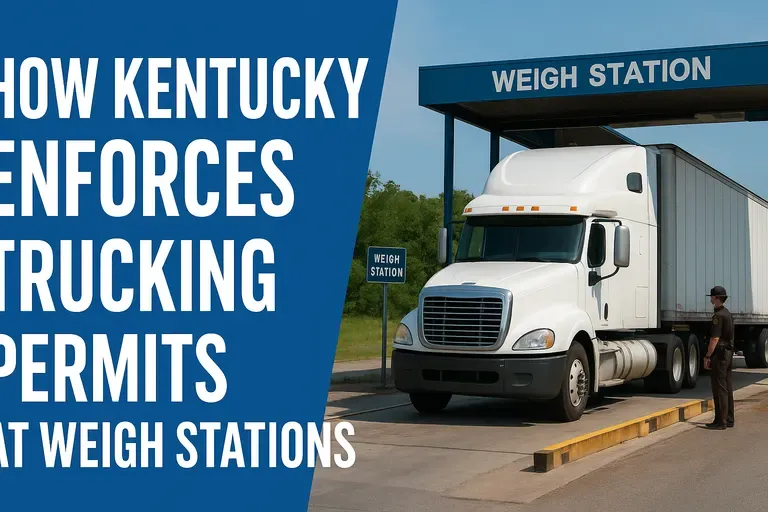
1. Purpose of Kentucky Weigh Stations
Kentucky weigh stations monitor:
-
Weight compliance (axle & gross weight)
-
Overdimensional permits
-
KYU number compliance
-
IFTA decals & fuel tax reporting
-
Registration, IRP, and trip permits
-
CDL and safety credentials
These stations help ensure highway safety and reduce road damage caused by overweight vehicles.
2. Electronic Pre-Clearance: Weigh-in-Motion (WIM)
Many Kentucky weigh stations are equipped with Weigh-in-Motion sensors.
These sensors allow officers to:
-
Detect overweight trucks before they arrive
-
Flag carriers for full inspection
-
Pre-screen in seconds
If your truck is overweight or missing required permits, the system may automatically send you to the inspection lane.
3. What Officers Check During Enforcement
A. Weight Compliance
Kentucky strictly enforces:
-
80,000 lb. gross vehicle weight limit (unless permitted)
-
Axle weight limits
-
Bridge formula compliance
If you're running with an Overweight Permit, officers verify the permit matches:
-
Axle configurations
-
Weight allowances
-
Route restrictions
-
Travel dates and times
B. Overdimensional Permits
For trucks with height, width, or length beyond legal limits, enforcement checks:
-
Validity of the Oversize Permit
-
Accuracy of dimensions listed
-
Escort vehicle requirements
-
Approved travel routes
-
Sunset/sunrise restrictions
C. KYU Number Verification
Kentucky officers check if your KYU:
-
Is active
-
Has no outstanding quarterly filings
-
Is not suspended
If KYU is suspended, your truck may be held until you correct the issue.
D. Trip Permit Enforcement
Out-of-state carriers must have a Kentucky 10-Day Trip Permit if not registered under IRP.
Weigh station staff check whether your permit is:
-
Present
-
Valid for current date
-
Correctly assigned to your vehicle
4. Inspection Results and Possible Violations
If violations are found, Kentucky may issue:
-
Citations/fines
-
Orders to correct weight before leaving
-
Permit invalidation
-
KYU suspension
-
Out-of-service orders in severe cases
Overweight violations are some of the costliest in Kentucky.
5. How to Avoid Problems at Kentucky Weigh Stations
To minimize risk:
-
Confirm KYU is active
-
Keep IFTA decals visible
-
Verify IRP or trip permit before entering the state
-
Double-check oversize/overweight permits
-
Stay within permitted routes and travel times
-
Maintain complete paperwork in the cab
6. Why Kentucky Has Strict Enforcement
Kentucky has a dense network of highways, coal routes, and commercial corridors. Strict permit enforcement helps the state:
-
Protect infrastructure
-
Reduce bridge damage
-
Ensure road safety
-
Prevent tax evasion
-
Maintain consistent regulations for all carriers