1. Kentucky: An Automotive Powerhouse
Kentucky ranks among the top automotive-producing states in the U.S., home to:
-
Toyota Motor Manufacturing Kentucky (TMMK) in Georgetown – the largest Toyota plant in the world, producing Camry, RAV4 Hybrid, and Lexus ES.
-
Ford Motor Company plants in Louisville – the Louisville Assembly Plant (producing Ford Escape and Lincoln Corsair) and Kentucky Truck Plant (producing Super Duty trucks and SUVs).
-
General Motors Bowling Green Assembly Plant, home of the iconic Chevrolet Corvette.
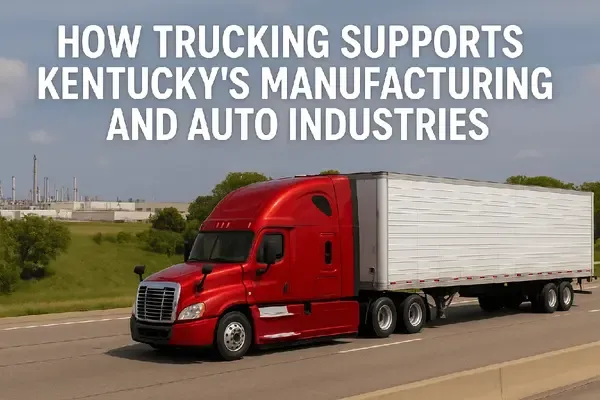
These facilities rely on constant, precise trucking operations to supply materials and ship finished vehicles across North America.
2. Just-in-Time Supply Chain Dependence
The automotive industry operates on a just-in-time (JIT) model, meaning factories keep minimal parts inventory.
Trucking ensures:
-
Frequent deliveries of components like engines, electronics, glass, and seats — often every few hours.
-
Synchronization between dozens of suppliers and assembly lines.
-
Minimized downtime, since even a short trucking delay can halt production.
Trucks connect Kentucky’s auto plants with suppliers in Ohio, Indiana, Tennessee, and Michigan, forming part of the Midwest’s manufacturing corridor.
3. Regional Supplier Network
Hundreds of Tier 1 and Tier 2 suppliers depend on trucking for their operations:
-
Plastics, metals, and electronics move daily between Elizabethtown, Bowling Green, and Georgetown.
-
Local Kentucky carriers specialize in short-haul and dedicated freight for automakers.
-
Cross-docking hubs near Louisville and Lexington facilitate quick transfers between modes — truck, rail, and air (UPS Worldport).
This integrated system allows for fast response to production changes and high-volume shipping efficiency.
4. Finished Vehicle Transportation
Once vehicles are assembled, trucking plays another vital role:
-
Car carriers (auto haulers) transport new vehicles to dealerships across the U.S. and Canada.
-
Trucks move vehicles to rail terminals in Louisville and Georgetown for long-distance distribution.
-
Specialized fleets maintain high safety and quality standards to prevent damage during transit.
The trucking industry moves hundreds of thousands of vehicles annually from Kentucky plants to market.
5. Economic Impact and Job Creation
-
Trucking creates thousands of direct and indirect jobs — from CDL drivers and dispatchers to mechanics and logistics managers.
-
Local trucking companies benefit from contracted routes serving auto plants and suppliers.
-
Every major automotive investment in Kentucky fuels growth in the freight and logistics sector, including warehouse and terminal development.
According to the Kentucky Cabinet for Economic Development, manufacturing and transportation together employ over 250,000 Kentuckians.
6. Future Trends: Green Logistics & Technology
Automakers and freight carriers are investing in:
-
Electric trucks and renewable fuel initiatives to cut emissions.
-
Smart logistics systems that track shipments in real time.
-
Expanded infrastructure, including truck charging stations and automated freight corridors.
These advancements strengthen Kentucky’s position as a modern, sustainable logistics hub for the automotive industry.
In Summary
From the assembly line to the dealership lot, trucking keeps Kentucky’s auto industry in motion. Every part, every delivery, and every vehicle that rolls off the line depends on an intricate trucking network — connecting Kentucky’s factories with the rest of America and driving the state’s economic engine forward.