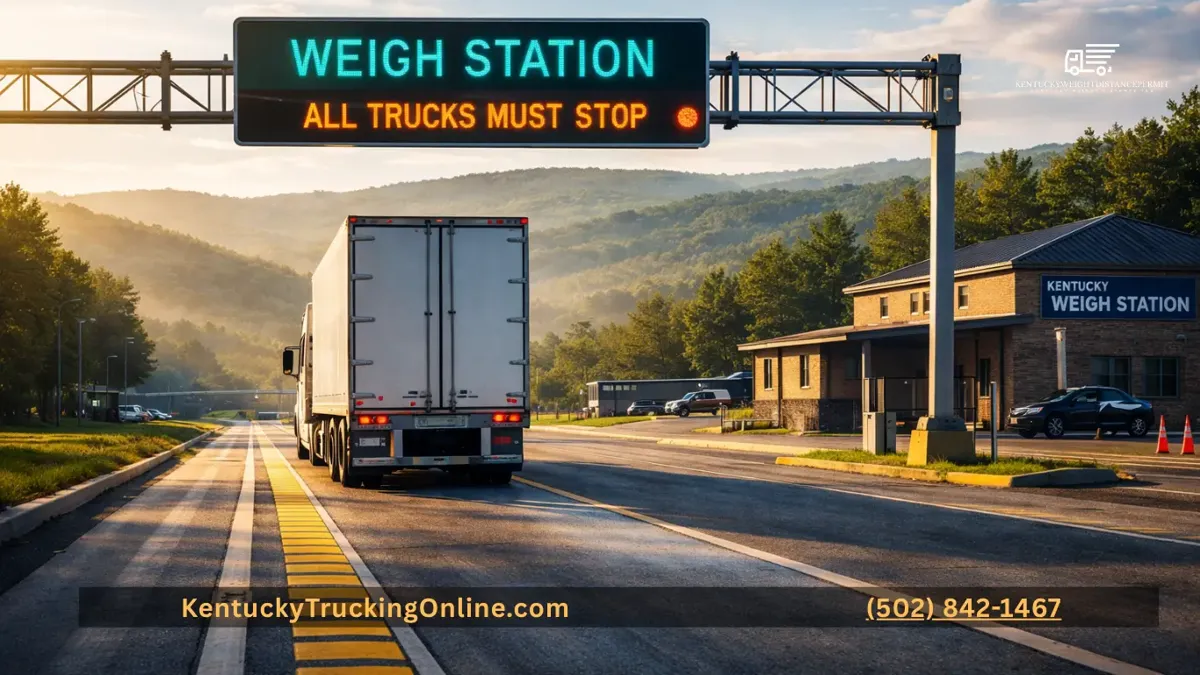
Weigh stations are a common but important part of truck drivers' compliance on the road in Kentucky. Kentucky prioritizes highway safety, vehicle weight regulations, and accurate tax reporting. Understanding how weigh stations work and how to prepare for inspections can help drivers avoid costly fines, delays, and KYU permit and weight distance tax compliance issues.
This guide will explain what truck drivers should expect when approaching a Kentucky weigh station and how to pass inspections smoothly.
Why Kentucky Weigh Stations Matter
Weigh stations play an important role in enforcing transportation laws. These checkpoints enable the Kentucky Transportation Cabinet (KYTC) and enforcement officers to ensure that commercial vehicles adhere to weight restrictions, safety regulations, and required permits.
During inspections, officers may examine several factors, including:
- Vehicle weight and axle distribution.
- Proper registration and credentials.
- Compliance with the Kentucky weight and distance tax
- Valid KYU permit for vehicles operating in Kentucky.
- Driver logs and hours-of-service (HOS) records
- Vehicle safety conditions include brakes, tires, and lights.
Failure to comply with these requirements may result in citations, fines, or even service suspension.
What to Expect When Approaching a Weigh Station
Most Kentucky highways have clearly marked signs that alert drivers to an approaching weigh station. When approaching one, drivers should slow down and follow the posted directions. Trucks are typically required to pull into the weigh station unless a sign indicates otherwise. Some locations employ electronic screening systems such as PrePass or Drivewyze, which may allow compliant drivers to bypass the station.
Trucks are typically required to pull into the weigh station unless a sign indicates otherwise. Some locations employ electronic screening systems such as PrePass or Drivewyze, which may allow compliant drivers to bypass the station.
Once inside the weigh station, drivers can encounter one of three scenarios:
1. Weigh-In Motion (WIM) Systems: Many stations use sensors embedded in the road to measure a truck's weight as it slowly moves through the station.
2. Static Scale Weighing: If the initial reading indicates a problem, drivers may be directed to a static scale for a more accurate weight check.
3. Inspection Area: In some cases, officers may direct trucks to a separate location for documentation or safety checks.
Document Officers May Request
To avoid delays, drivers should always keep the necessary documentation readily available. This may include:
- Valid KYU permit.
- Proof of Kentucky weight and distance tax registration.
- Vehicle registration and IFTA credentials.
- Bill of Lading or Shipping Documents
- Driver's license and medical certificate
- ELD (Electronic Logging Device) records
If a driver operates a vehicle weighing more than 60,000 pounds, the KYU permit is required to report and pay the Kentucky weight distance tax, which is calculated based on the number of miles traveled within the state.
Tips for Passing Kentucky Weigh Station Inspections Smoothly
Preparation is critical to avoiding violations. Here are some useful tips for truck drivers:
Keep your KYU account up-to-date. Ensure that your KYU permit is active and that your Kentucky weight distance tax filings are up-to-date.
Check Your Weight Before Driving. Know your truck's axle weights and ensure you're within legal limits before hitting the road.
Conduct thorough pre-trip inspections to identify problems with brakes, tires, lights, and other safety components.
Keep permits, registration documents, and shipping paperwork neatly organized and readily available for presentation.
Follow the weigh station instructions carefully. Pay attention to posted signs and officer instructions to avoid unnecessary penalties.
Simplify Your KYU Permit and Kentucky Weight Distance Tax Filing
Managing trucking compliance in Kentucky can be time-consuming, especially if you're trying to keep your loads moving and meet delivery deadlines. Filing the Kentucky weight distance tax, maintaining an active KYU permit, and keeping records organized are critical to avoiding problems at weigh stations and during roadside inspections.
This is where professional filing services can help.
Kentucky Trucking Online makes it easy for truck drivers and fleet owners to stay in compliance with Kentucky regulations. Our team assists you in obtaining or renewing your KYU permit as quickly as possible, accurately filing your Kentucky weight distance tax reports, and maintaining good account standing.
Instead of worrying about paperwork, deadlines, or filing errors that could result in penalties, you can trust experienced professionals to handle the process for you. This saves time, reduces stress, and helps keep your trucks on the road without any unnecessary compliance issues.
If you operate commercial vehicles weighing more than 60,000 pounds in Kentucky, using a reputable service to manage your KYU permit and Kentucky weight distance tax filings can help you avoid costly delays and focus on what is most important: running your business.