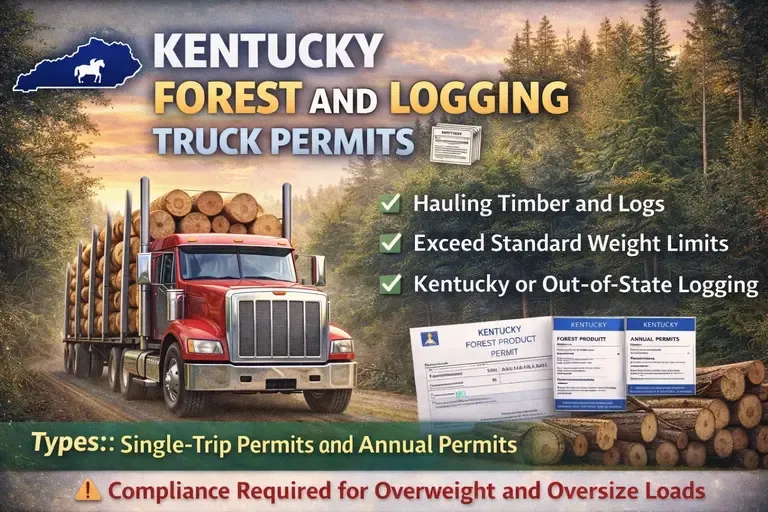
Who Needs a Forest & Logging Permit?
You need a special permit if your vehicle:
-
Hauls logs, timber, or other forest products
-
Exceeds standard weight limits for public highways
-
Operates on roads not designed for heavy commercial traffic
-
Is out-of-state, traveling into Kentucky for logging operations
This applies to:
-
Logging companies
-
Independent timber haulers
-
Owner-operators contracted for forest product transport
Types of Logging Permits in Kentucky
1. Forest Product Single-Trip Permits
-
For one-time or occasional logging trips
-
Covers overweight or over-dimension loads
-
Valid for the duration of the trip only
2. Forest Product Annual Permits
-
For carriers that regularly haul timber
-
Allows multiple trips throughout the year
-
Must be renewed annually with updated vehicle and weight information
3. Special Oversize/Overweight Permits
-
Required if your load exceeds legal height, width, or length
-
May include:
-
Escort vehicle requirements
-
Restricted travel times
-
Route limitations
-
Weight Limits for Logging Trucks
-
Standard single-vehicle weight limit: 80,000 lbs GVW
-
Logging trucks may exceed standard limits with proper permits
-
Kentucky may allow additional weight allowances for timber if hauling logs directly from harvest sites
Routes and Restrictions
-
Logging trucks must follow approved state and county routes
-
Certain bridges and roads have special weight restrictions
-
Some rural or forest roads require special routing approvals
How to Apply for a Kentucky Forest & Logging Permit
-
Determine your vehicle type and weight
-
Choose permit type: single-trip or annual
-
Provide route information and trip dates
-
Submit application to the Kentucky Transportation Cabinet (KYTC)
-
Pay applicable fees
-
Display permit in vehicle cab for inspection
Permits can be obtained online at https://www.kentuckytruckingonline.com/
Enforcement
Kentucky law enforcement and KYTC officers check permits at:
-
Weigh stations
-
Ports of entry
-
Roadside inspections
Operating without the proper logging permit can result in:
-
Fines
-
Trip delays
-
Out-of-service orders
Best Practices for Compliance
-
Always check route restrictions before hauling
-
Maintain up-to-date weight and vehicle records
-
Carry permits in the vehicle cab
-
Renew annual permits before expiration
-
Coordinate with local counties if hauling on secondary roads
Key Takeaways
-
Kentucky requires forest and logging permits for overweight and over-dimension timber haulers
-
Single-trip and annual permits are available depending on frequency of hauling
-
Compliance protects roads and bridges and avoids fines
-
Permits must be visible and valid during all operations