1. Who Needs to Pay the Weight Mile Tax
You must pay the Kentucky Weight Mile Tax if your vehicle:
-
Has a gross vehicle weight (GVW) over 59,999 lbs, or
-
Operates as part of a fleet exceeding state weight limits, or
-
Travels on Kentucky highways for business purposes, including both intrastate and interstate trips.
Exemptions:
-
Vehicles under 59,999 lbs
-
Certain government-owned vehicles
-
Farm vehicles and agricultural equipment (in specific cases)
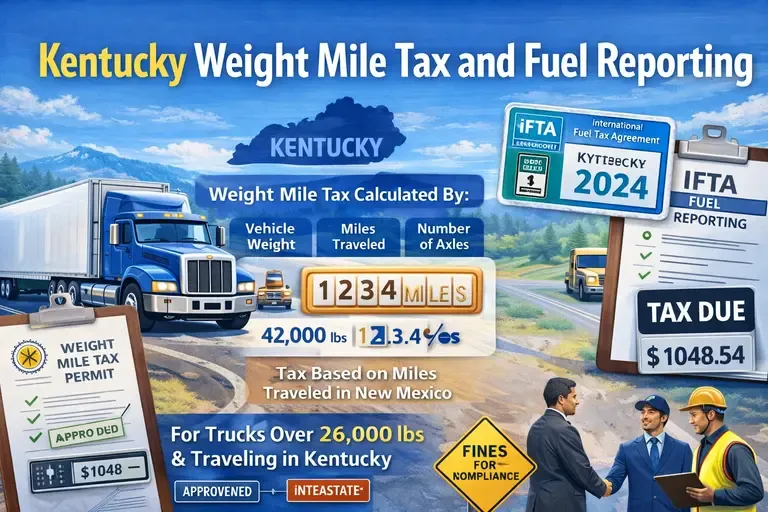
2. How the Tax Is Calculated
The Weight Mile Tax depends on:
-
Vehicle Weight – Heavier trucks pay more.
-
Miles Traveled in Kentucky – Total distance on taxable roads.
-
Number of Axles – Vehicles with more axles often have a different tax rate.
Example: A 50,000 lbs truck driving 1,000 miles in Kentucky will pay a higher tax than a 30,000 lbs truck covering the same distance.
3. Fuel Reporting Requirements
Kentucky also requires fuel reporting under IFTA (International Fuel Tax Agreement) if your fleet operates across state lines. Key points:
-
IFTA decals must be displayed on all qualified vehicles.
-
Fuel consumption is reported quarterly to Kentucky Department of Revenue (DOR).
-
Fuel taxes are credited against the Weight Mile Tax where applicable.
4. How to File and Pay
-
Register with the https://www.kentuckytruckingonline.com/
-
Track miles accurately for each vehicle operating in Kentucky.
-
Calculate the tax using the state’s weight and mile charts.
-
Submit reports and payments on time to avoid fines.
5. Compliance & Penalties
-
Failure to report or pay the Weight Mile Tax may result in:
-
Fines and interest
-
Vehicle impoundment at weigh stations
-
Suspension of operations in Kentucky
-
Tip: Maintain mileage logs, weigh tickets, and fuel receipts to support your reporting.
Quick Takeaway:
Any trucking company operating heavy vehicles in Kentucky must comply with the Weight Mile Tax and submit accurate fuel reports under IFTA. Compliance avoids costly penalties and ensures smooth interstate and intrastate operations.