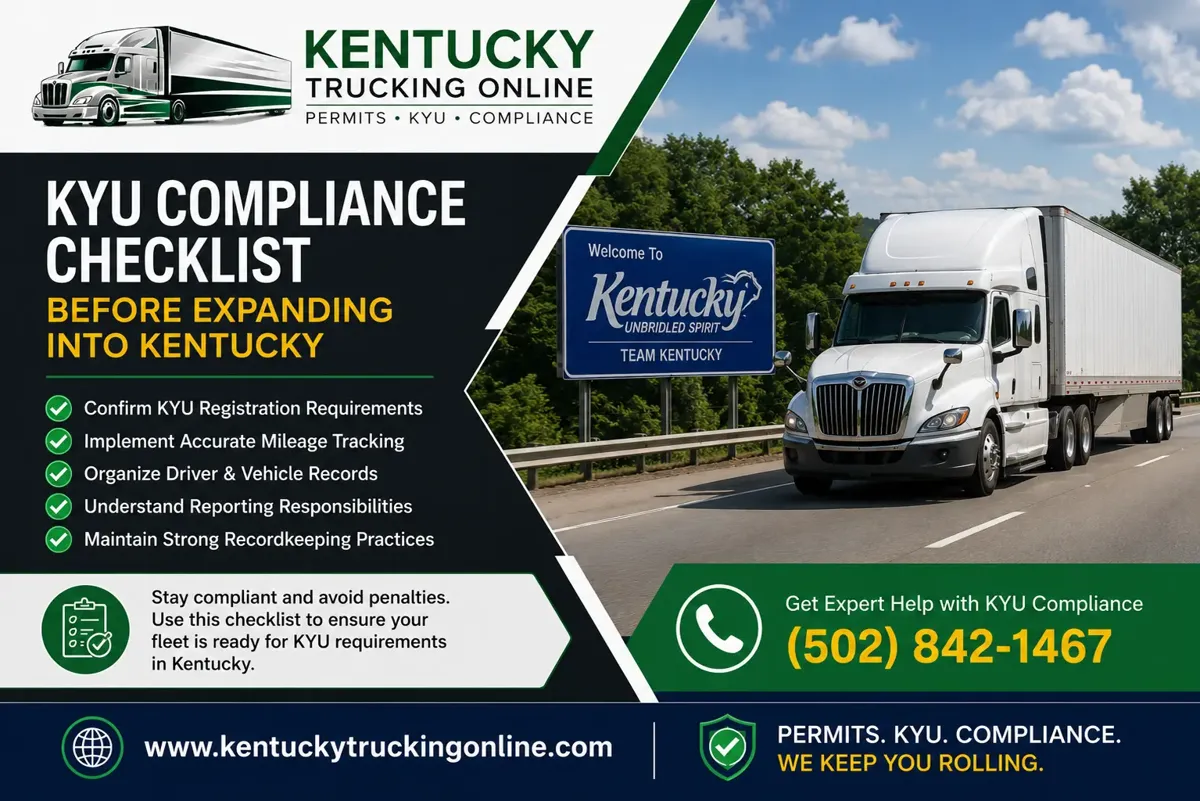
Expanding trucking operations into Kentucky can create new business opportunities, but it also comes with important compliance responsibilities.
One of the most important requirements for qualifying carriers is to obtain and maintain a Kentucky Highway Use (KYU) account.
Before your trucks begin operating in the state, it is essential to complete a compliance checklist to avoid delays, penalties, and reporting issues.
Determine Whether Your Fleet Needs a KYU Account
The first step is to determine whether your vehicles are subject to Kentucky's weight-distance tax requirements. Generally, motor carriers operating vehicles with a registered weight exceeding 59,999 pounds on Kentucky highways must obtain a KYU number. Reviewing your fleet's vehicle weights before entering the state can help prevent unexpected compliance issues.
Verify Vehicle Registration Information
Accurate vehicle registration records are critical for KYU compliance. Make sure all trucks entering Kentucky have current registrations, and that vehicle information matches company records. Inaccurate or outdated records can create reporting challenges and increase the risk of compliance problems.
Establish a Mileage Tracking System
KYU reporting is based on miles traveled within Kentucky. Before expanding operations, implement a reliable system for tracking Kentucky mileage. GPS-based fleet management tools, electronic logging devices, and mileage reporting software can help improve accuracy and reduce administrative burdens.
Organize Driver Documentation Procedures
Drivers play an important role in maintaining compliance. Ensure they understand the documentation requirements and can accurately record routes, mileage, and trip information. Consistent procedures can help eliminate reporting discrepancies and support audit readiness.
Prepare for Ongoing Reporting Obligations
Obtaining a KYU number is only the beginning. Carriers must submit required reports and maintain accurate operational records. Establishing a reporting calendar before entering Kentucky can help ensure deadlines are met and prevent unnecessary penalties.
Review Internal Recordkeeping Practices
Strong recordkeeping is essential for successful KYU compliance. Maintain organized records of mileage reports, vehicle information, fuel records, dispatch data, and supporting documentation. Having these records readily available can simplify reporting and make future audits less stressful.
Why Many Trucking Companies Choose Our Service
Many trucking companies rely on Kentucky Trucking Online for assistance with permit and compliance requirements because the process can be time-consuming and complex.
Our team helps carriers navigate registration requirements, maintain compliance, and obtain the permits they need to keep operations moving efficiently. This allows trucking companies to focus on serving customers while reducing administrative burdens.
Conduct a Final Compliance Review
Before launching operations in Kentucky, conduct a final review of your registrations, reporting systems, mileage-tracking processes, and documentation procedures. Taking time to complete this checklist can help your company enter the Kentucky market with confidence while minimizing compliance risks and operational disruptions.