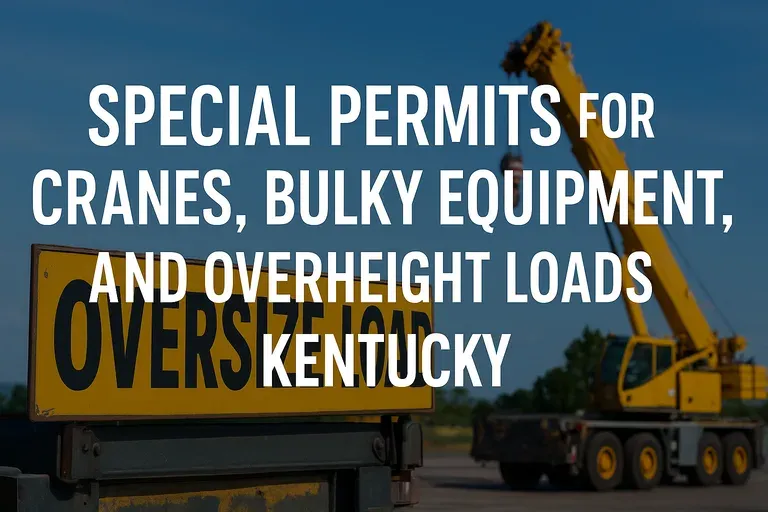
1. When Special Permits Are Required
A special permit is required when any vehicle or load exceeds Kentucky’s legal limits:
-
Width: Over 8 ft 6 in
-
Height: Over 13 ft 6 in
-
Length: Over 65 ft (varies by configuration)
-
Weight: Over 80,000 lbs GVW or above axle limits
Because cranes and industrial equipment often exceed height, weight, or axle spacing restrictions, these moves are nearly always permitted as Non-Divisible Loads.
2. Crane Transport: What Makes It Unique
Cranes present unusual challenges due to:
-
Concentrated axle weights
-
Long front or rear overhang
-
Boom height and travel position
-
Reduced maneuverability
Kentucky requires:
-
Special routing to avoid low-clearance structures
-
Bridge review when axle weights exceed thresholds
-
Travel restrictions in congested or construction zones
-
Specific escort (pilot car) requirements depending on width/height
Self-propelled cranes, specifically, may need additional review because they distribute weight differently than standard trailers.
3. Permits for Bulky or Heavy Construction Equipment
This includes equipment such as:
-
Excavators
-
Dozers
-
Pavers
-
Industrial machinery
-
Mining equipment
Key considerations:
-
Securement must comply with FMCSA rules
-
Overhang must not create safety hazards
-
Track/wheel width often triggers escort requirements
-
Height may require route surveys if over 14 ft
Kentucky may also require the equipment to be transported on a lowboy or detachable trailer if the machinery itself cannot meet legal limits.
4. Overheight Load Rules and Reviews
Overheight loads (above 14 ft) may require:
-
Engineering review
-
Route survey documentation
-
Restrictions on certain parkways or tunnels
Loads above 15 ft are closely scrutinized due to power lines, overpasses, and signal equipment.
Kentucky often mandates pilot cars with height poles for extra-tall loads.
5. Escort (Pilot Car) Requirements
Pilot cars are required based on height, width, length, and route type.
Common triggers:
-
Over 12 ft wide → 1 escort
-
Over 14 ft wide → 2 escorts
-
Over 15 ft high → Height pole escort
-
Over 120 ft long → Multiple escorts
The state may add or remove escort requirements depending on the specific route.
6. Travel Time Restrictions
Crane and heavy equipment moves may be limited to:
-
Daylight only
-
No travel during severe weather
-
No holiday or holiday-weekend travel
-
Restricted travel through downtown areas during rush hours
Overheight loads face the most routing restrictions because of safety concerns.
7. K-TRIPS: Kentucky’s Electronic Permit System
Carriers apply for all OSOW permits through www.kentuckytruckingonline.com, which provides:
-
Automated route evaluation
-
Bridge/load analysis
-
Instant permits for standard OSOW
-
Manual review for cranes and extreme weights
Large cranes or high-tonnage equipment may require manual review, which increases processing time.
8. Common Issues Carriers Experience
Carriers moving cranes or heavy equipment in Kentucky often encounter:
1. Unexpected bridge weight limits
Routes may be rejected if axle group weights exceed acceptable levels.
2. Overheight route conflicts
Low overpasses and overhead utilities are common in rural areas.
3. Insufficient trailer configuration data
K-TRIPS may deny a permit if spacing details are missing.
4. Escort vehicle mistakes
Incorrect or missing pilot cars can result in roadside penalties.
5. Last-minute routing changes
Weather, construction, or accidents may require reroutes and new permits.
9. Penalties for Non-Compliance
Improperly permitted crane or overheight moves may result in:
-
Heavy fines
-
Load shutdown
-
Escort requirement enforcement
-
Mandatory re-routing or re-permitting
-
Potential damage liability if a structure is hit
Kentucky takes overheight violations especially seriously due to infrastructure damage risks.