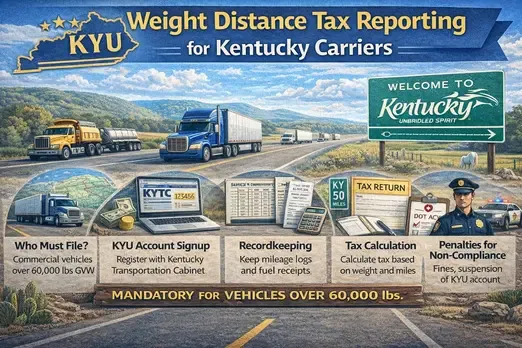
1. What Is the KYU Weight Distance Tax?
The KYU tax applies to vehicles that:
-
Are commercial vehicles over 60,000 pounds gross vehicle weight
-
Operate on Kentucky roads
-
Are registered under the Kentucky KYU number program
This tax is calculated based on:
-
Vehicle weight
-
Miles traveled in Kentucky
It is separate from federal fuel taxes and IFTA reporting.
2. Who Must File
-
For-hire motor carriers
-
Private carriers exceeding the weight threshold
-
Out-of-state carriers operating in Kentucky
Vehicles under 60,000 pounds generally do not need a KYU account, unless specifically required by Kentucky DOT.
3. How to Apply for a KYU Account
-
Obtain a KYU number from the https://www.kentuckytruckingonline.com/
-
Provide vehicle information: license plate, GVW, axle configuration
-
Pay initial KYU registration fees
-
Receive your KYU number, which must be displayed on vehicles
You can apply online at https://www.kentuckytruckingonline.com/
4. Reporting Requirements
-
Report mileage monthly or quarterly, depending on fleet size and registration
-
Include total miles traveled in Kentucky by each vehicle
-
Calculate tax owed based on weight and miles
-
Submit KYU tax returns and payments at https://www.kentuckytruckingonline.com/ in your personal cabinet
Tips for Accurate Reporting
-
Keep trip logs or electronic mileage records
-
Maintain fuel receipts and vehicle weight documentation
-
Verify mileage by route, including local pickups and deliveries
5. Penalties for Non-Compliance
Failing to report KYU taxes can result in:
-
Fines and late fees
-
Suspension of KYU registration
-
Denial of vehicle registration or operating authority
Accurate and timely reporting ensures your fleet remains in good standing with Kentucky DOT.
6. Key Takeaways for Kentucky Carriers
-
KYU is mandatory for vehicles over 60,000 lbs
-
Reporting is weight- and mileage-based
-
Maintain accurate records to avoid penalties
-
Renew KYU accounts and report mileage on time
Final Thoughts
For trucking companies operating in Kentucky, compliance with Weight Distance Tax reporting is essential. Proper registration, accurate mileage tracking, and timely tax filing help maintain legal operations and prevent fines or disruptions to your fleet.