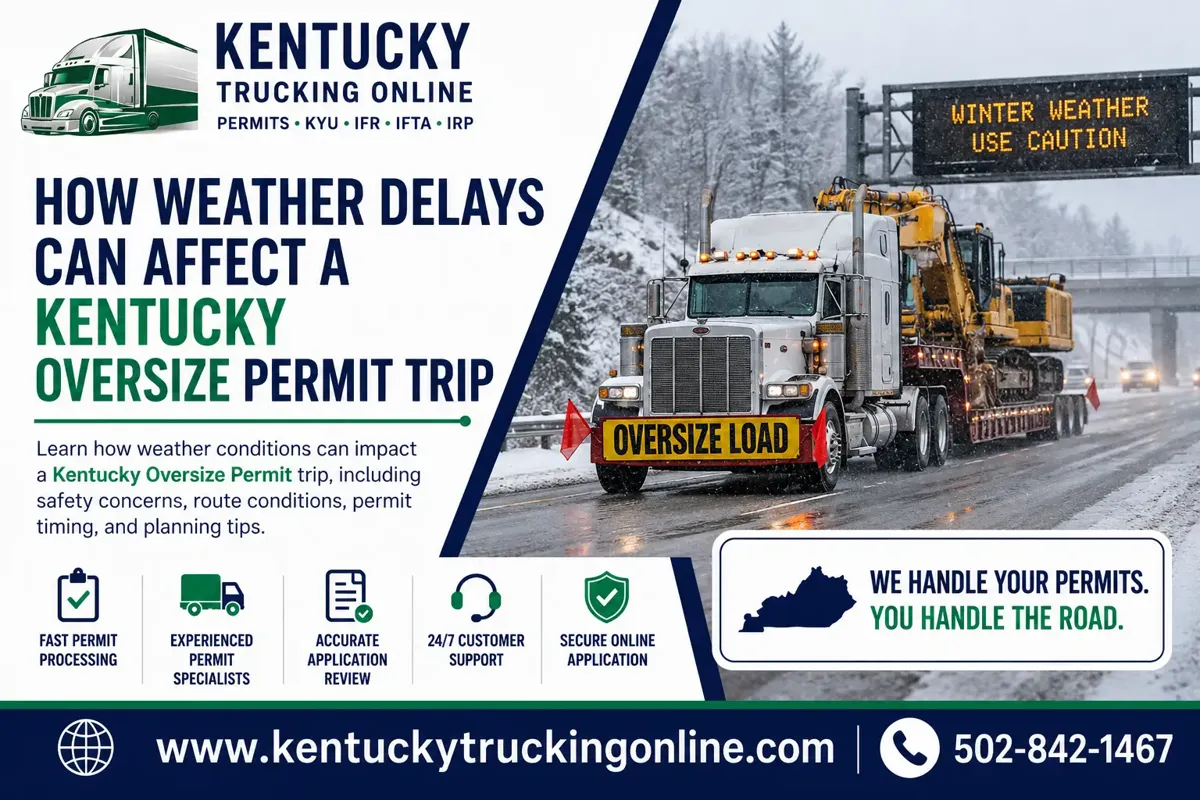
How Weather Delays Can Affect A Kentucky Oversize Permit Trip
Table Of Contents
-
Introduction
-
Why Weather Matters For Oversize Loads
-
How Weather Can Delay A Permitted Trip
-
What Happens If Travel Must Be Postponed
-
Weather And Route Conditions
-
What Drivers And Dispatch Should Monitor
-
Common Planning Mistakes To Avoid
-
Why Many Trucking Companies Choose Our Service
-
FAQ
Introduction
Weather can change a transportation schedule quickly, especially when a truck is carrying a wide, long, tall, or heavy load. Rain, strong winds, snow, ice, flooding, and other adverse conditions can make an approved route more difficult or unsafe to travel.
A Kentucky Oversize Permit does not remove the driver's responsibility to operate safely. Weather conditions can affect whether a permitted movement should continue, and carriers may need to adjust their plans when conditions become dangerous.
Why Weather Matters For Oversize Loads
Oversize loads can be more sensitive to weather than standard freight. A tall load can be affected by strong crosswinds, while a wide load may have less room to maneuver when visibility is reduced or pavement conditions deteriorate.
Heavy equipment can also require more distance to slow or stop when road surfaces are wet, icy, or covered with snow. Severe weather may create additional concerns around bridges, curves, grades, construction areas, and narrow portions of the permitted route.
Kentucky rules provide that overweight or overdimensional movement should not be made when adverse weather or road conditions would make the move dangerous. Certain wider movements can also be restricted when a wind advisory is in effect.
A permit should therefore be viewed as authorization for a planned movement under applicable conditions, not as a guarantee that the truck can travel regardless of weather.
How Weather Can Delay A Permitted Trip
A weather delay can happen before departure or after the truck has already started moving.
Before departure, dispatch may decide to postpone loading or hold the truck at the origin until conditions improve. This can be appropriate when severe storms, snow, ice, high winds, or flooding are expected along the route.
A delay can also develop during the trip. If conditions become unsafe, the driver may need to stop at an appropriate location and wait for conditions to improve. The original delivery schedule may then no longer be practical.
What Happens If Travel Must Be Postponed
When weather prevents safe travel, the priority is protecting the driver, equipment, cargo, and other road users.
The carrier should review the permit details and determine whether the planned movement can still take place within the authorized conditions and travel period. A weather delay does not automatically mean the permit remains usable indefinitely.
If the trip can no longer be completed as planned, the carrier may need updated authorization or other arrangements before continuing. This is especially important when the delay affects the travel date, route, vehicle configuration, or other information shown on the permit.
Weather And Route Conditions
Weather should be evaluated across the entire planned route, not just at the starting point.
A truck leaving a clear area may encounter heavy rain farther along the route. Snow and ice can also vary between regions, while strong winds may be a bigger concern on exposed roads, bridges, or open stretches of highway.
Road conditions can be just as important as the forecast. Flooding, standing water, fallen trees, debris, damaged pavement, and reduced visibility can affect whether a route is appropriate for an oversize movement.
Because a permitted route has been planned around the dimensions and characteristics of the load, an unexpected route change should not be treated casually. Dispatch should review any proposed change rather than directing the driver onto an alternative road without checking whether it is suitable and authorized.
What Drivers And Dispatch Should Monitor
Good communication between the driver and dispatch can make weather delays easier to manage.
Before departure, review the forecast, expected road conditions, and possible problem areas along the route. The driver should also have enough time in the schedule to stop safely if conditions deteriorate.
During the trip, communication should continue when severe weather or changing road conditions are reported. Dispatch can help track closures and delays while the driver focuses on safe operation.
Common Planning Mistakes To Avoid
One common mistake is assuming that a valid permit means the trip must continue despite unsafe conditions. Safety remains the priority.
Another mistake is planning the trip with no schedule flexibility. Oversize movements can take longer than standard freight even under normal conditions, so severe weather can quickly disrupt a tight delivery appointment.
Carriers should also avoid relying on a forecast checked only once. Weather can change during the day, and road conditions can change even faster.
Finally, do not assume that an alternative route is automatically acceptable because it appears faster on a navigation system. A route change can introduce restrictions, low clearances, weight limitations, or other problems that were not part of the original plan.
Why Many Trucking Companies Choose Our Service
Managing a Kentucky Oversize Permit becomes easier when trucking companies have support before a trip begins. Kentucky Trucking Online provides fast processing, 24/7 customer support, weekend and holiday availability, secure online applications, competitive pricing, and experienced permit specialists.
Our service helps trucking companies prepare permit information carefully and stay organized when weather, scheduling, or routing issues affect a planned movement.
FAQ
Can weather make a Kentucky Oversize Permit trip unsafe?
Yes. Adverse weather or road conditions can make an oversize movement dangerous, and the carrier must prioritize safe travel.
Can a driver continue during severe weather if the permit is valid?
A valid permit does not mean the driver should continue when weather or road conditions make the movement unsafe.
What should dispatch do when weather delays the trip?
Dispatch should review the permit, monitor changed conditions, communicate with the driver, and determine whether the trip can still be completed within the authorized conditions.
Can a weather delay affect the permitted travel period?
Yes. A significant delay can affect the planned travel date or other permit conditions. The carrier should review the permit before continuing.
Should weather be checked only before departure?
No. Conditions can change during the trip, so drivers and dispatch should continue monitoring weather and road conditions along the route.
Can a carrier simply choose another road because of bad weather?
Not necessarily. Any alternate route should be evaluated to make sure it is appropriate for the vehicle and load and consistent with applicable permit requirements.
For more information, visit the Kentucky Transportation Cabinet.