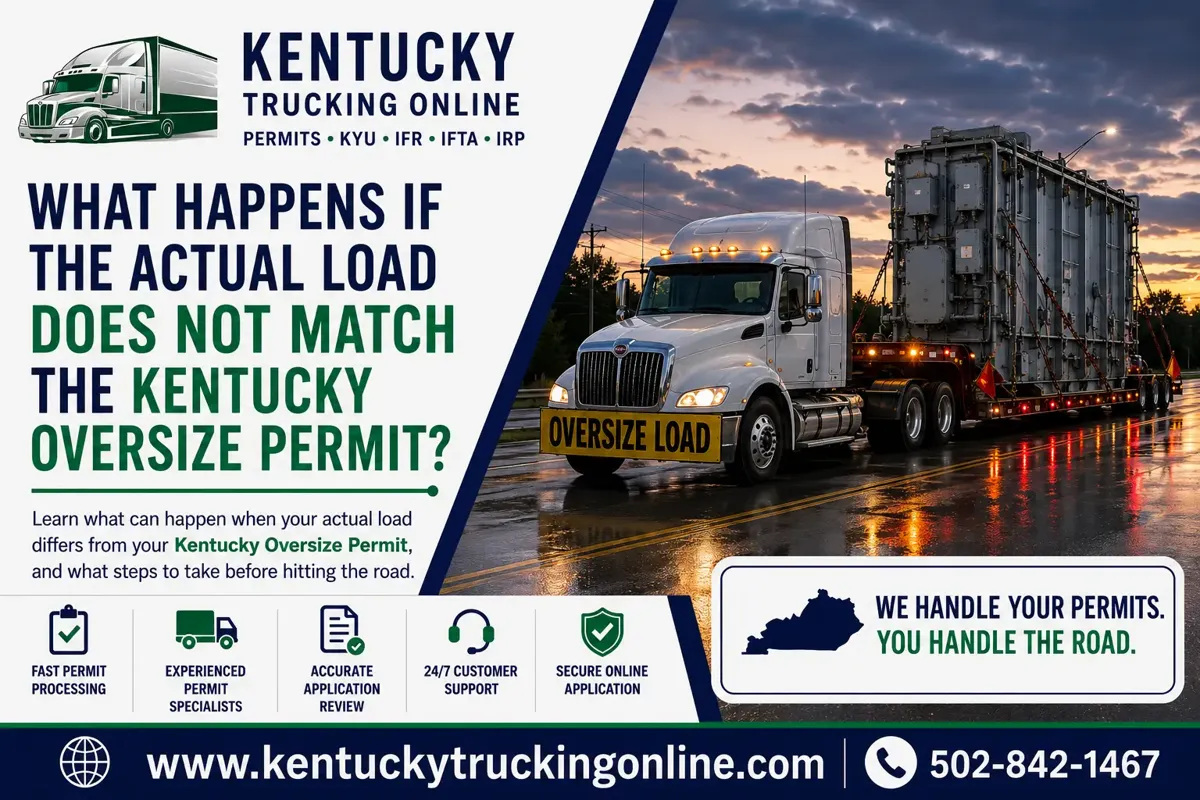
What Happens If The Actual Load Does Not Match The Kentucky Oversize Permit?
Table Of Contents
-
Introduction
-
Why The Actual Load Must Match The Permit
-
What Can Cause A Load To Change
-
What Happens If The Load Is Wider, Taller, Or Longer
-
What Happens If The Load Is Heavier
-
Why Load Changes Can Affect The Approved Route
-
What To Do Before Starting The Trip
-
Common Mistakes To Avoid
-
Why Many Trucking Companies Choose Our Service
-
FAQ
Introduction
A Kentucky oversize permit is based on the vehicle and load information provided during the permitting process. When the actual load is different from the configuration described on the permit, trucking companies should not assume that the existing permit automatically covers the new configuration.
Changes to width, height, length, weight, axle configuration, or other important details can affect the conditions under which the load may legally travel. Kentucky requires authorization for applicable overweight or overdimensional movements on state-maintained highways, and permit conditions can include specific routing requirements.
For this reason, carriers should verify the actual loaded vehicle against the permit before beginning the trip.
Why The Actual Load Must Match The Permit
An oversize permit is prepared using specific information about the movement. That information helps determine the appropriate route and conditions for transporting the load.
If the actual vehicle is wider, taller, longer, or heavier than what was submitted, the approved movement may no longer accurately describe the vehicle traveling on the highway.
The same issue can occur when the trailer, axle configuration, cargo position, or other important part of the vehicle configuration changes.
Before leaving, trucking companies should compare the completed load with the information shown on the permit and address any significant differences before beginning the movement.
What Can Cause A Load To Change
A load does not always change because the cargo itself was replaced. Small adjustments during loading can also affect the final configuration.
Common examples include:
-
Changing the trailer used for transportation
-
Repositioning the cargo
-
Adding or removing equipment
-
Loading additional components
-
Changing the cargo orientation
-
Using different tires or equipment configurations
-
Changing the number or arrangement of axles
-
Discovering that the cargo weighs more than originally estimated
For example, moving a long piece of equipment farther toward the front of a trailer can change the amount of rear overhang. A different trailer can also change the overall height of the loaded vehicle.
Because of these possibilities, the final configuration should be checked rather than assuming that the original application information is still accurate.
What Happens If The Load Is Wider, Taller, Or Longer
If the actual load is larger than the dimensions shown on the Kentucky oversize permit, the existing permit may not provide authorization for the new configuration.
This can be particularly important when the difference affects the route. A wider or taller load may require different clearance considerations, while additional length or overhang can affect turns and other parts of the approved movement.
Trucking companies should not simply proceed because the difference appears minor. The permit should accurately correspond to the load being transported.
If the dimensions have changed, contact the appropriate Kentucky permitting authority or permit specialist to determine what needs to be done before travel.
What Happens If The Load Is Heavier
Weight changes can create a different issue from dimensional changes.
A load may have the same width and height but still differ from the permitted configuration because its actual weight is greater than the weight listed on the permit. Weight distribution can also change when cargo is repositioned.
The gross vehicle weight, axle weights, axle spacing, and configuration should therefore be checked against the permit information.
Kentucky maintains specific requirements for overweight movements, and the Transportation Cabinet uses permit procedures for vehicles exceeding applicable weight or dimension limits.
If the actual weight does not match the permitted information, the carrier should address the discrepancy before beginning the trip.
Why Load Changes Can Affect The Approved Route
A permit is not simply permission to move an oversized object. The conditions of the movement can be connected to the vehicle's specific dimensions and weight.
A route that works for one configuration may not be suitable for another. For example, a change in width can affect roadway clearance, while additional weight can affect whether particular bridges or roadway sections can accommodate the movement.
Kentucky's overweight and overdimensional permit procedures can require approved routing, and route deviations may require prior approval.
This is why trucking companies should treat changes to the actual load seriously. A configuration change can potentially affect more than just the numbers written on the permit.
What To Do Before Starting The Trip
Before departing with a Kentucky oversize load, trucking companies should take a few minutes to verify the final configuration.
Check:
-
Overall width
-
Overall height
-
Overall length
-
Front and rear overhang
-
Gross vehicle weight
-
Individual axle weights
-
Axle spacing
-
Number of axles
-
Tractor and trailer information
-
Cargo description
-
Approved route
-
Permit dates and conditions
If everything matches the permit, the carrier can proceed according to the applicable permit conditions.
If something does not match, do not assume that the difference is automatically acceptable. The carrier should determine whether the permit needs to be corrected, replaced, amended, or otherwise addressed before travel.
Common Mistakes To Avoid
Assuming small changes do not matter:
Even a seemingly minor change can affect the permitted configuration or routing requirements.
Measuring the cargo before final loading:
The final position of the load can change its dimensions and weight distribution.
Using an old permit configuration:
A different truck, trailer, or load arrangement may require different permit information.
Ignoring axle weights:
A load can remain within its expected gross weight while distributing weight differently across the axles.
Continuing after discovering a discrepancy:
If the actual load does not match the permit, address the issue before beginning or continuing the permitted movement.
Changing the route to accommodate the new load:
A different configuration should not automatically be taken on a different route. Kentucky permit procedures can require prior approval for route deviations.
A careful pre-trip review can help trucking companies identify discrepancies before they become a problem on the road.
Why Many Trucking Companies Choose Our Service
Many trucking companies choose Kentucky Trucking Online because oversize permit applications require accurate information, and load details can sometimes change between application and departure. Our experienced permit specialists help trucking companies review the information needed for their Kentucky oversize permit and handle the permitting process efficiently.
With fast processing, 24/7 customer support, weekend and holiday availability, a secure online application, competitive pricing, and experienced permit specialists, Kentucky Trucking Online provides a convenient way to manage permit needs and reduce avoidable delays. Our team helps trucking companies keep their applications organized and make sure important vehicle and load details receive the attention they require.
Apply for your Kentucky oversize permit today.
FAQ
Can I travel if my actual load is slightly different from my Kentucky oversize permit?
Do not assume that a difference is acceptable simply because it appears small. Verify the actual configuration against the permit and address any discrepancy before travel.
What if my load is wider than the dimensions on the permit?
A wider load may not be covered by the existing permit. The carrier should verify the difference and determine whether updated authorization is required before beginning the movement.
What if my actual load weighs more than the permitted weight?
The carrier should address the difference before travel. Weight and axle information should accurately represent the configuration being transported.
Can changing the trailer affect my Kentucky oversize permit?
Yes. A different trailer can change overall dimensions, axle configuration, weight distribution, and other information associated with the permitted movement.
Can moving the cargo on the trailer change the permit requirements?
It can. Repositioning cargo may change overhang, dimensions, axle weights, and weight distribution.
What should I do if I discover a discrepancy before departure?
Stop the permitting process from moving forward until the discrepancy has been reviewed. Contact the appropriate permitting authority or permit specialist to determine what action is necessary.
Can I change the route if the actual load does not fit the original route?
Do not simply choose a different route. Kentucky's permit procedures can require prior approval for route deviations, so the carrier should obtain the appropriate authorization before deviating from the approved route.
Why is it important for the actual load to match the permit?
The permit is based on the specific vehicle and load information submitted for the movement. Keeping the actual configuration consistent with that information helps trucking companies maintain compliance and avoid preventable permitting problems.
For more information, visit the Kentucky Transportation Cabinet.