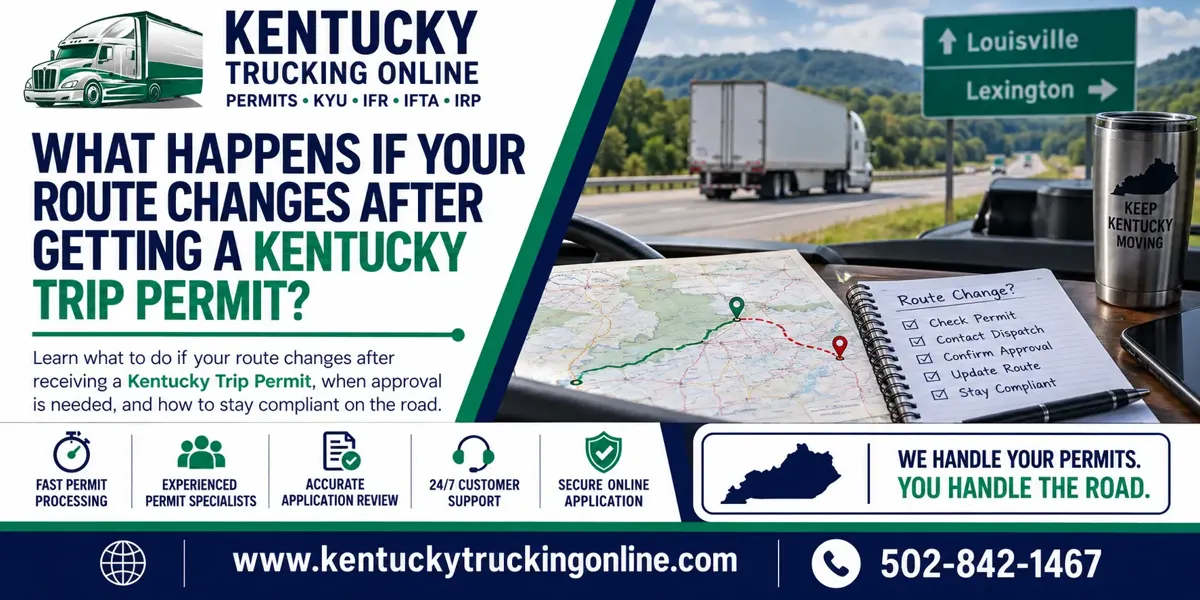
What Happens If Your Route Changes After Getting A Kentucky Trip Permit?
Table Of Contents
-
Introduction
-
Why Route Changes Matter
-
Can You Simply Take A Different Route
-
What To Do Before Changing The Route
-
What If A Road Is Closed
-
Why Route Deviations Need Approval
-
What Happens If You Deviate Without Approval
-
How Dispatch Should Handle A Route Change
-
How To Prevent Route Problems
-
Why Many Trucking Companies Choose Our Service
-
FAQ
Introduction
When a trucking company receives a Kentucky Trip Permit, the approved route becomes an important part of the planned movement. Conditions can change before or during travel. Road closures, construction, traffic restrictions, weather, or unexpected problems may make another route necessary.
Trucking companies should not assume they can simply leave the approved route whenever circumstances change. Kentucky requires prior written approval for a deviation from routes approved by the Transportation Cabinet for applicable overweight or overdimensional movements.
Knowing how to handle a route change can help carriers avoid an unauthorized deviation.
Why Route Changes Matter
A Kentucky Trip Permit for an overweight or overdimensional movement is tied to the details of the permitted trip. The route is part of those details and should be reviewed before the truck begins travel.
Kentucky describes a single-trip permit as a one-time permit showing the requested origin and destination, and permit requirements are connected to the specific vehicle, route, and load. An alternate road should not automatically be treated as covered by the existing permit.
If circumstances require the truck to leave the approved route, the carrier should address the change before proceeding.
Can You Simply Take A Different Route?
Kentucky's travel provisions require a permit holder to obtain prior written approval from the Division of Motor Carriers for a deviation from routes approved by the Transportation Cabinet when operating under applicable overweight or overdimensional permits.
This is especially important when an alternate route is being considered because of a road closure, construction, an unexpected restriction, or another issue affecting the original route.
The driver should contact dispatch rather than making an unauthorized route change.
What To Do Before Changing The Route
The first step is to stop and review the situation before proceeding onto a different route.
Dispatch should identify why the original route cannot be followed and determine where the proposed deviation would take the vehicle. The company should then review the permit and determine what approval is required.
The driver should keep the permit available and provide dispatch with the vehicle's location, proposed route, and reason for the change.
Obtaining approval before the deviation helps the carrier address the route change while keeping the permitted movement within the applicable requirements.
What If A Road Is Closed?
A road closure can create an urgent situation. A driver should not knowingly continue along a route that is closed simply because it appears on the permit.
The driver should notify dispatch as soon as the problem becomes known. Dispatch can then determine the appropriate next step and seek the necessary approval for a route deviation when required.
An alternate road may involve different clearances, bridge limitations, roadway conditions, or other restrictions. A road available to ordinary traffic may not be suitable for a permitted load.
Why Route Deviations Need Approval
Route approval matters because the approved route is connected to the characteristics of the permitted movement.
Kentucky requires permit holders to review their approved route and measure relevant vertical and lateral clearances before travel. A route deviation can introduce conditions that were not considered when the original permit was issued.
An alternate road may have different bridges, intersections, utilities, weight restrictions, or clearance limitations. Carriers should therefore treat the approved route as an operating requirement rather than a general suggestion.
What Happens If You Deviate Without Approval
An unauthorized route deviation can create a compliance problem because the vehicle would be traveling outside the approved conditions of its permit.
Kentucky states that violating a single-trip permit can result in the permit being confiscated and returned to the Division of Motor Carriers, at which point it becomes null and void. The carrier may then need to obtain a new permit and may also be subject to penalties from law enforcement.
A driver should not assume that a shortcut or alternate road is acceptable simply because it saves time.
How Dispatch Should Handle A Route Change
Dispatch can reduce problems by creating a clear procedure for route changes.
When a driver reports a route issue, dispatch should review the current permit. Important information includes the permit number, vehicle information, origin, destination, approved route, load details, and permit validity period.
The company should determine whether prior written approval is required and obtain that approval before the truck uses the alternate route.
The driver should wait for instructions rather than independently selecting a new route.
How To Prevent Route Problems
Before dispatch, trucking companies should review the permit and confirm that the origin, destination, vehicle, load, and approved route are correct. The company should also identify potential problem areas.
Drivers should receive the approved route and clear instructions to contact dispatch before making a deviation.
Careful planning gives the carrier more time to respond when unexpected conditions affect the planned movement.
Why Many Trucking Companies Choose Our Service
Managing permit details and route requirements can become difficult when a trucking company is working with changing schedules or unfamiliar Kentucky routes.
Kentucky Trucking Online helps trucking companies with the Kentucky Trip Permit process and can provide support when carriers need help preparing their permit information.
Our service can make the application process easier to manage and help trucking companies stay organized when trip details require careful review.
FAQ
Can I change my route after receiving a Kentucky Trip Permit?
Not automatically. For applicable overweight or overdimensional permitted movements, Kentucky requires prior written approval for a deviation from routes approved by the Transportation Cabinet.
What if the original road is closed?
Contact dispatch before taking an alternate route. The carrier should determine whether approval for a route deviation is required before proceeding.
Can a driver choose a shortcut?
A driver should not take an unauthorized shortcut simply because it appears faster. The alternate route should be reviewed against the permit requirements before the vehicle changes course.
Does a Kentucky Trip Permit cover every road in the state?
No. The permitted movement is connected to the approved route. Carriers should follow the route shown or approved for the specific movement.
What happens if a carrier violates a single-trip permit?
Kentucky states that the permit may be confiscated and become null and void. The carrier may need to obtain a new permit and may also face penalties from law enforcement.
Should drivers carry the permit during the trip?
Yes. Kentucky's travel provisions require the permit to be carried in the motor vehicle providing the power for the permitted movement.
How can trucking companies avoid route problems?
Review the permit before departure, verify the approved route, monitor conditions, give drivers clear instructions, and obtain approval before making a route deviation.
For more information, visit the Kentucky Transportation Cabinet.