Get The Latest News, Advice & Best Practice From Blog

Kentucky DOT Trucking Permits Explained
The Kentucky Transportation Cabinet (KYTC) requires trucking permits for vehicles that exceed legal size, weight, or configuration limits on state highways. These permits ensure safety, protect infrastructure, and regulate heavy haul operations across Kentucky.
Jan. 7, 2026, 1:39 p.m.
Read more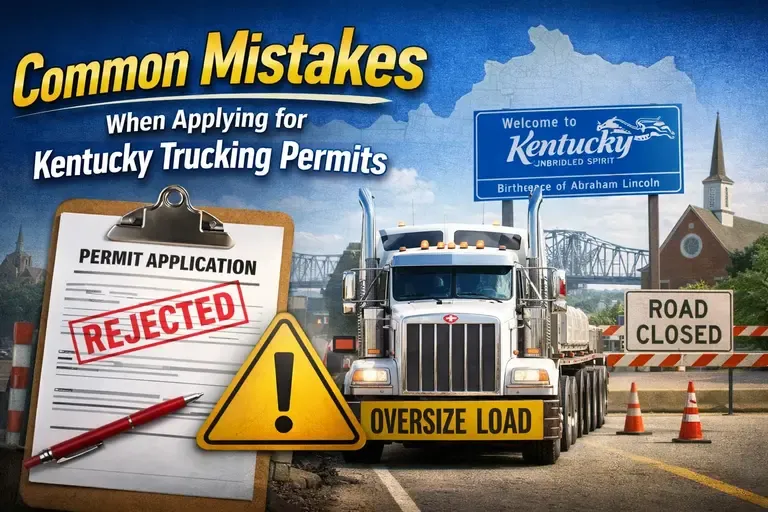
Common Mistakes When Applying for Kentucky Trucking Permits
Applying for trucking permits in Kentucky may seem straightforward, but even small errors can lead to costly delays, fines, or permit rejections. Whether you’re an owner-operator or managing a fleet, understanding the most common mistakes can help you stay compliant and keep your loads moving.
Jan. 5, 2026, 7:25 p.m.
Read more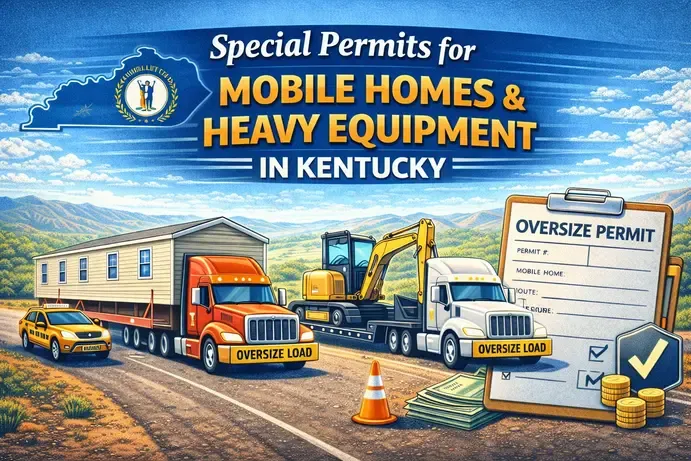
Special Permits for Mobile Homes and Heavy Equipment
Transporting mobile homes or heavy equipment in Kentucky often involves moving loads that exceed the state’s legal size or weight limits. To ensure safety, protect infrastructure, and comply with state regulations, carriers must obtain special permits before travel. These permits authorize oversize or overweight movements and come with specific conditions.
Jan. 4, 2026, 4:16 p.m.
Read more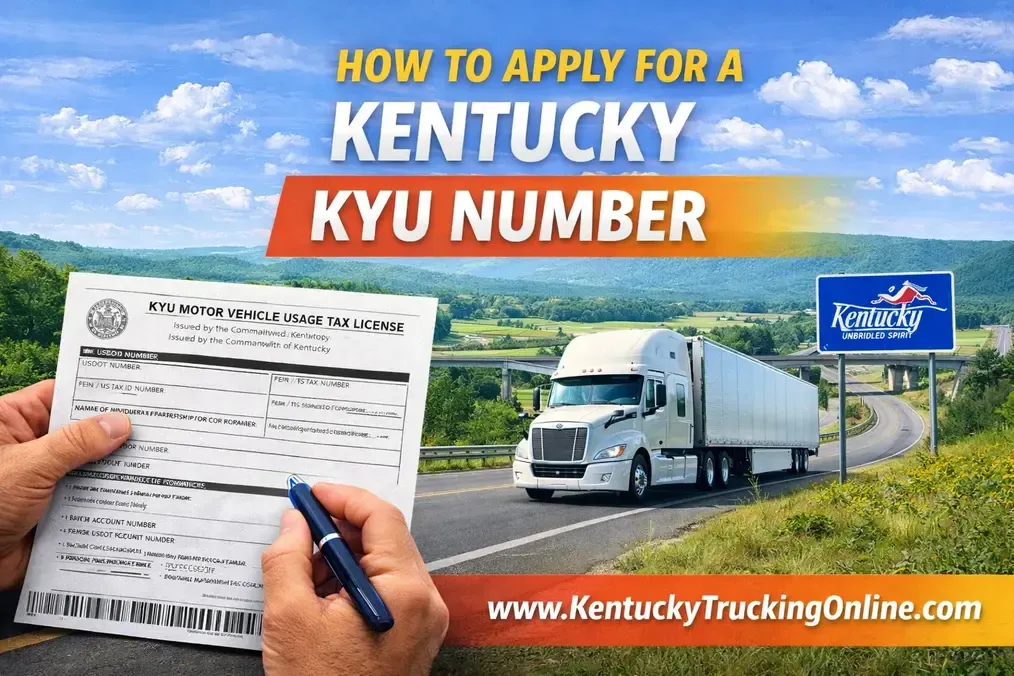
Apply for a Kentucky KYU Number
If your trucking business operates in Kentucky, one of the first steps for compliance is obtaining a Kentucky KYU Number. This number is required for commercial motor carriers traveling in Kentucky, and it ensures that your fleet pays the proper weight-mile taxes.
Jan. 3, 2026, 3:19 p.m.
Read more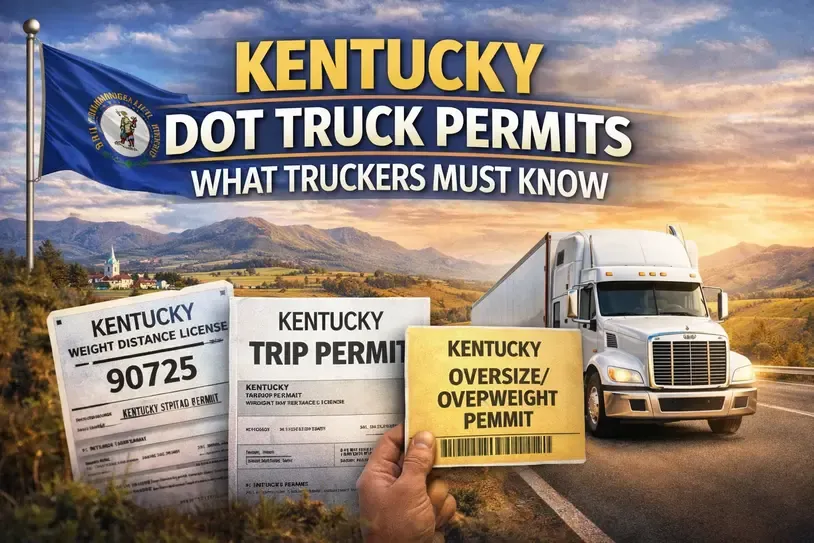
Kentucky DOT Truck Permits-What Truckers Must Know
Operating a commercial truck in Kentucky requires compliance with Kentucky Transportation Cabinet (KYTC) and Kentucky DOT (KY DOT) permit regulations. Whether you’re an owner-operator, fleet manager, or out-of-state carrier, understanding Kentucky truck permit requirements is essential to avoid fines, delays, and out-of-service violations. This guide explains which Kentucky DOT truck permits are required, who needs them, and how to stay compliant.
Jan. 2, 2026, 5:12 p.m.
Read more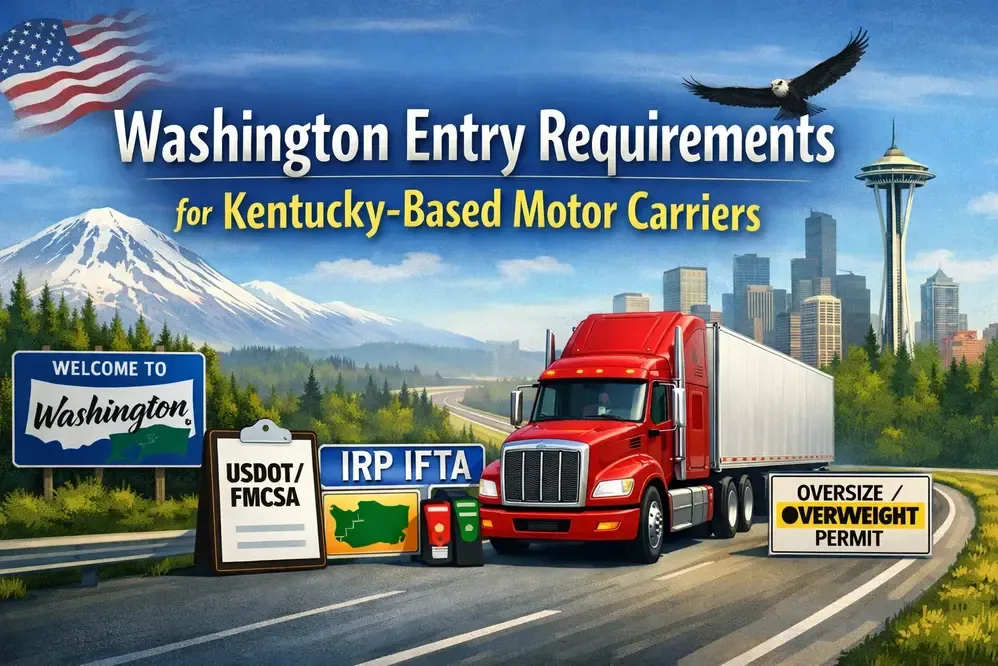
Washington Entry Requirements for Kentucky-Based Motor Carriers
Washington State entry requirements for Kentucky‑based motor carriers (and other out‑of‑state carriers) — what you must know if your vehicles plan to enter and operate in Washington:
Jan. 1, 2026, 3:18 p.m.
Read more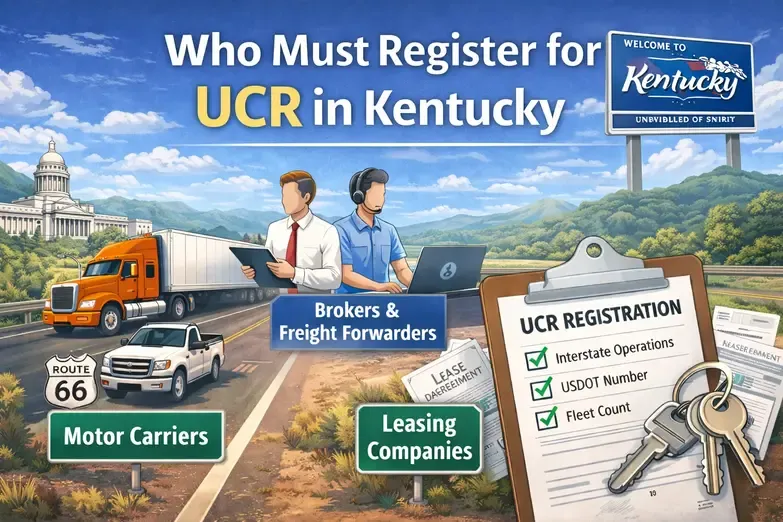
Who Must Register for UCR in Kentucky
The Unified Carrier Registration (UCR) Program is a federally mandated program that applies to commercial motor carriers, brokers, and freight forwarders that operate interstate commerce. In Kentucky, it is administered under the federal UCR agreement with oversight coordinated through the state.
Dec. 30, 2025, 6:40 p.m.
Read more
Do Kentucky Carriers Need Permits to Operate in Oregon
Yes — Kentucky carriers (or any out‑of‑state motor carriers) generally do need permits or proper Oregon credentials to legally operate commercial vehicles in Oregon. What exactly you need depends on the nature of your operations (temporary vs regular) and the type of vehicle/load.
Dec. 29, 2025, 6:04 p.m.
Read more
How to Apply for a Kentucky KYU Number
A Kentucky KYU Number is a tax license issued under the Kentucky Weight Distance Tax law. It applies to commercial motor carriers whose vehicles have a combined gross weight of 60,000 lbs or more and travel on public highways in Kentucky. Once issued, the KYU number stays with your business and is used to file quarterly weight-distance tax returns based on miles traveled in the state.
Dec. 28, 2025, 12:35 p.m.
Read more